
I think New Years needs a rebranding. As a society, we are overly obsessive about what this transition means. It’s thought of as a time to start fresh, to hastily erase all of our bad habits in the hopes of becoming healthier, wealthier, more productive, etcetera. Our attempts to meet lofty expectations overwhelm our conscience, the building pressure feeding on our motivation until the stress eventually smothers it entirely. But in reality, the rapid “all or nothing” mentality is unsustainable and more exhausting than it is rejuvenating. And so our resolutions rarely make it past January. The repeated “I’ll do it next year” phrase becomes only a reassurance, preventing you from drowning in the guilt of feeling like you failed.
But you aren’t the problem; you don’t lack “willpower”, you aren’t unmotivated. Your approach is what fails you. It is believed that you cannot improve without committing yourself to a plan that outlines perfection. We revisit what we believe could have been, attempting to overcompensate for the time lost on progress that we “should” have made.
However, trying to reach a rigidly structured goal is like climbing a mountain while staring at the peak. To approach it seems insurmountable, an overwhelming and seemingly fruitless endeavor. You focus heavily on how lengthy and difficult the journey will be, how unprepared you feel, and your mind gives up before you’ve even begun to climb. If you aren’t capable of ascending to the top by the criteria you’ve given yourself, you’re hopeless.
Yet, if you face the mountain head-on, you are forced to climb it step-by-step. Suddenly, it doesn’t feel so insuperable. Manageable, even. You realize that every step brings you closer to the summit, and the peak slowly enters into focus. The less distant it becomes, the more motivated you feel to continue on, one foot after the other. Eventually, you’ll find yourself beaming with pride as you gaze downward at the journey you’ve completed, the growth you’ve achieved.
This model displays how an uncompromising method of aspiring towards your goals proves insufficient. Taking baby steps is different. By breaking an imposing goal into smaller pieces, reaching it finally becomes attainable, less daunting. The journey towards your aspirations may still be difficult, but every chunk of progress made inspires you to continue. Like they say, don’t forget to “celebrate the small wins”!
So, this year, don’t pour all of your energy into a 1-month strategy that feels like a chore. It won’t get you anywhere! Instead, pave the road towards your goals with intention, building them brick-by-brick rather than in one sweeping motion. It may not achieve the idealistic immediate change, but the long-lasting impacts are worth the investment of time. Now, all you need to do is highlight something you wish to improve, and this new procedure will guide you towards your first successful set of resolutions. Can you believe it?! If you need some inspiration on where to begin, read below to see how I’m aspiring to transform myself this year.


1. Be more creative
For the average person, the utilization of modern technology is inevitable. At work, at school, at home, to order your supplements, to pay your bills, to listen to music. Anything and nearly everything can be accomplished online. And while unlimited access can be convenient, technology is like a drug. The dopamine rush keeps us addicted to our screens, glued to them like they’re a lifeline. Formerly interesting pastimes have morphed into endless cycles of meaningless scrolling that leave us feeling depleted and disconnected from our own realities. As a student growing up in this contemporary, technological world, I find it especially important to take breaks away from my devices, or they overconsume my conscience.
My intention is to reconnect myself with traditional hobbies that offer a more fulfilling use of my time than unsatisfactory screen usage. It doesn’t have to be complex; my main goal is to create, with my hands (!), and to learn something new while doing so. Learning a new painting technique, knitting a hat, creating a new recipe, learning a new instrument, maybe even exploring architectural drawings and designing my dreamhouse (it’s Scandinavian style, if you’re curious). Regardless of the activity, I want to disassociate myself from using technology during my freetime and exercise my creativity instead. To build new neurological pathways instead of frying those already existing.
It sounds simple, but as a society we have become so accustomed to relying on screens as a source of entertainment that it can be hard to break away.
My approach: Choose a creative endeavor you might find interesting to pursue, begin learning the basics, and improve from there. However, don’t feel limited by what you’ve tried initially- there is always something new to explore if you aren’t intrigued by your original choice. When you find something you enjoy, make any required materials easily accessible. For example, if you want to enhance your drawing capabilities, carry your sketchbook everywhere you go, reaching for it when boredom strikes as opposed to grabbing your phone. Keeping your materials readily available and within view encourages you to begin creating and serves as a helpful reminder of your inspired intentions.
Another helpful strategy is to limit what you can access online. If you overuse your streaming service, cancel it. If you find yourself continuously wasting time on social media, delete the application(s). It may feel undesirable at first, but there is so much more to life than a steady stream of blue light and constant overstimulation– that’s a promise.

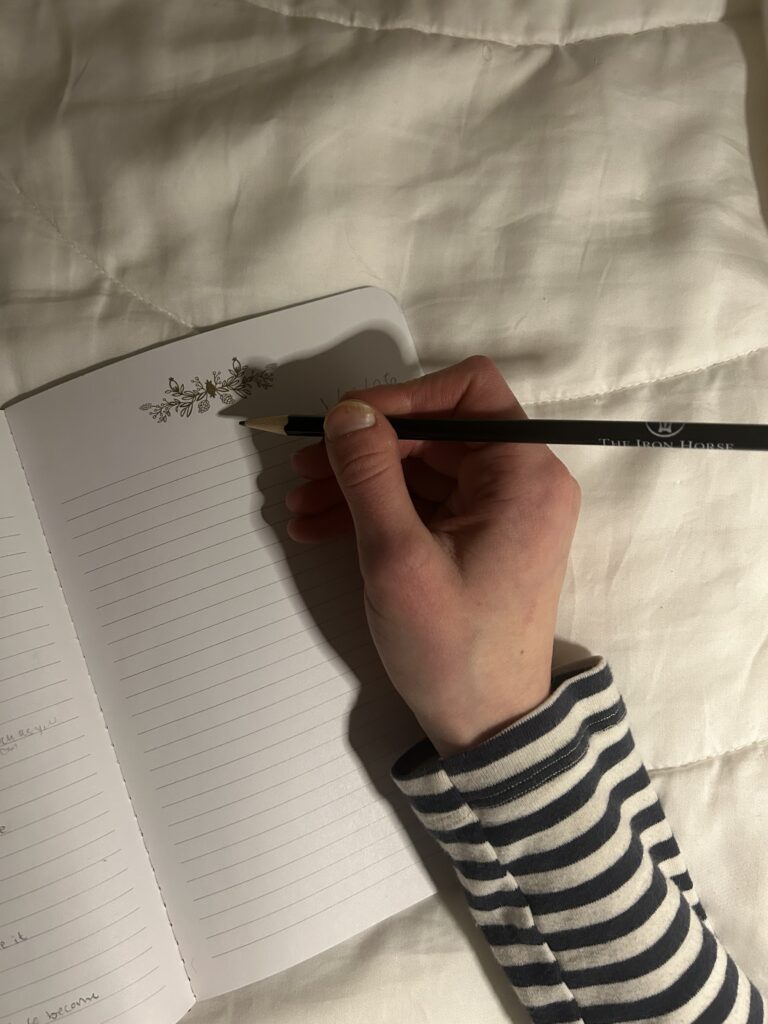
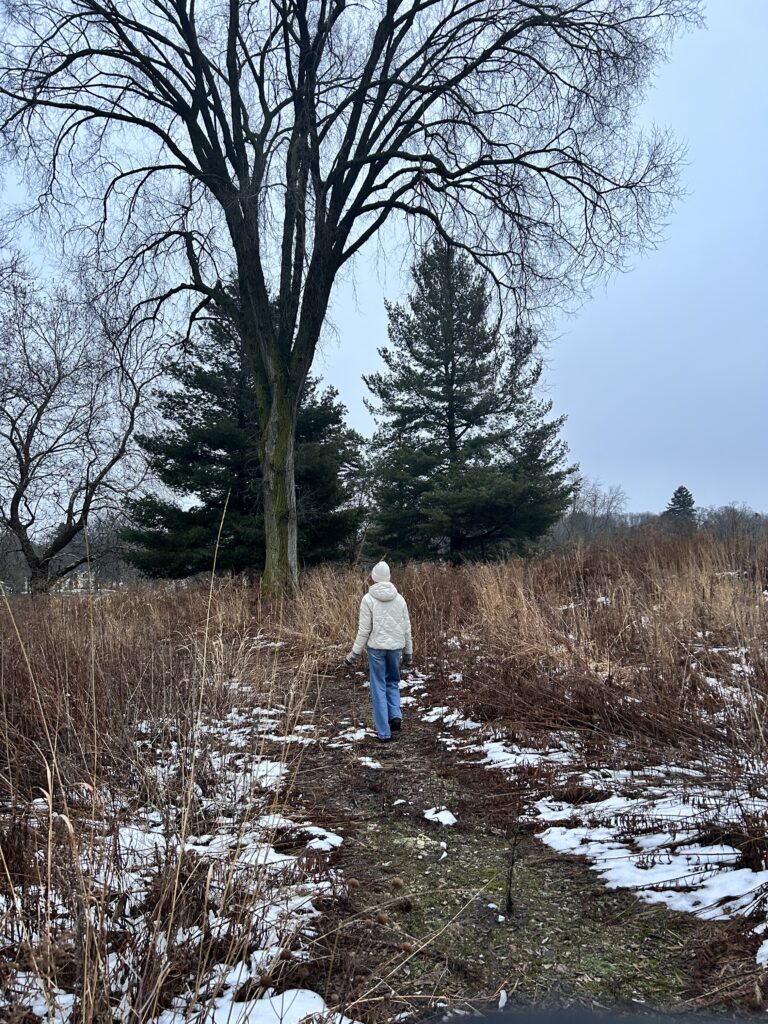
2. practice mindfulness
Our lifestyles today are often characterized by fast-paced schedules and a repeated chorus of the words go, go, go playing in our minds. We move through our days imagining what’s coming next, rather than concentrating on the present. Our fight-or-flight instincts remain endlessly switched on. This haste disconnects us from our natural rhythms and diminishes our self-awareness, causing us to be continually stressed, overwhelmed, and fatigued. To realign myself, I intend to practice being mindful.
Mindfulness isn’t a quality you acquire, it is a state of being. To be mindful is to be fully aware of yourself and your surroundings in the present moment, without dwelling in the past or looking towards the future. Cultivating awareness will help you to better understand your emotions, how to support yourself through difficult situations, feel calm, and stay focused. Mindfulness encourages us to regard our thoughts, situations, and surroundings neutrally and thoughtfully, without drifting hastily from one context to another. Through this practice we can slow a racing mind and reconnect with the present moment, decluttering our headspace and finding peace within ourselves regardless of the events in our lives.
Incorporating mindfulness into your day to day life doesn’t have to be overwhelming; after all, it preaches the opposite. Being mindful can look like simply taking a few deep breaths to recenter yourself, or noticing when you’re being critical of something and responding by opening your mind. Or maybe you take time to carefully observe your surroundings, making note of the things you usually ignore. Other ideas include eating a meal without distraction, highlighting the flavors and textures you experience, or heightening your awareness while performing everyday tasks, fully processing the sensory details. You can also elevate your practice by including a grounding session of meditation or settling yourself into the rhythm of movement opportunities like yoga or walking, quieting your mind. Anything that reorganizes your scattered thoughts and centers you into the moment is a good idea.
Remember, mindfulness is not the definitive answer for outside stressors, but it offers peace and grounds us when life gets hectic. Embrace awareness this new year and see what a difference it makes.
3. release judgement, be curious
We are constantly evaluating our surroundings. Our brains process every minute detail that we absorb, forming our various perspectives contingent on specific values and beliefs we uphold. Unfortunately, our society has normalized the cultivation of a judgemental outlook over our experiences. We overlook the complexity of a situation, simply deeming something acceptable or unacceptable depending on how our expectations sway our perception. For example, we may walk past someone and internally (or externally) comment on their outfit. Our outlook may be positive, deeming the outfit stylish, or we may regard it negatively, deeming the outfit unfashionable. Or perhaps more relatable, making a comment on the way someone is driving, or on someone’s political standpoint (you know you do both). Either way, we are judging the actions of someone else by consulting our own preference, what we perceive to be right and wrong.
Most often, we automatically develop harsh, negative assumptions about circumstances we know so little about. We act like we have all the answers, the only solution, dismissing all other possibilities. This approach is hardly uncommon- we have been trained to think this way- but these unnecessary remarks fail to help us grasp the entire picture. To shift our perspectives, we must be inquisitive, open-minded, and eager to seek a more complete understanding. We must be curious.
Where judgement cleaves us apart and builds critical assumptions without context, curiosity nurtures connection and seeks to comprehend the stem of a situation. When we implement curiosity to consider a set of affairs, we quit being presumptuous and begin asking questions. We stop pointing to blame, searching instead for what is manipulating the circumstances. Through this, we are able to forge deeper connections, view the world with compassion, and accept a diverse array of perspectives, even when they differ largely from our own.
While eliminating judgment can be an arduous task, there are many ways to reshape your response to reflect curiosity. The most productive method is to stop assuming. Replace any presumptions of someone’s circumstances with observations, analyzing their behavior and recognizing the position they might be in. Put yourself in their shoes. Additionally, around others, try restructuring your questions. Instead of leading with an accusatory “why” this, “why” that, use neutral phrasing that invites conversation to gain a broader understanding of the current situation. And finally, be attentive. Release self-absorption, acknowledge the backstory that each person arrives with, and focus on seeking those details. Paying attention to someone’s story allows you to realize the unnoticeable weight they carry. Listen before you respond.
When we challenge our judgemental nature, we can collaborate without tension, accept our differences, and understand one another with new found empathy. We no longer respond with dismissive assumptions, replying instead with compassionate questions that seek the truth. Aspiring to summon curiosity reflects our shared humanity, joining us together. However, it also connects us with our higher selves, amplifying our growth as individuals. While its clear assumptions aren’t favorable, I believe that in a world that is so remarkably divided, releasing judgement may be the force that finally unites us. So, if there is one thing you commit to this year, let it be forging new connections and choosing peace when we so frequently wage war.
A brief conclusion
If you made it through the entire article, I hope you’ve found thoughtful inspiration for intentions you’d like to embrace this year. If there was one thing that struck me the most while writing this, it would be that change can be overwhelming. The number of ways we could improve are innumerable, each one consuming more time and effort than we were prepared for. And while reconfiguring your entire life would be impressive, it is unsustainable and unrewarding when you completely uproot your sanity failing to confine yourself behind unyielding bars of discipline. The truth is, change requires time. Even seemingly minor transitions unfold slower than we’d imagine. The best way to respect an adjustment to your lifestyle is to have patience and be intentional in your progression towards your end goal. And when things get hard, do not give up. Life is unpredictable- bumps in the road are bound to slow you down- but we are resilient. I assure you, there is light at the end of the tunnel. So, in working towards meaningful change this year, remember that rushing your journey forward results only in unforgiving stress. Be intentional. Be patient. And remember to enjoy your journey forward; it’s just as important as the end result.
some quotes to motivate you..
“It might take a year, but that year will go by anyway”
“Act like the person you wish to become”
“The scariest place to be is in the same position as last year. So grow!”
As the year already feels as though it’s FLYING by, I’m grateful to you for putting these thoughts out for contemplation.
The days do pass so quickly!! I’m so glad you enjoyed the post 🙂